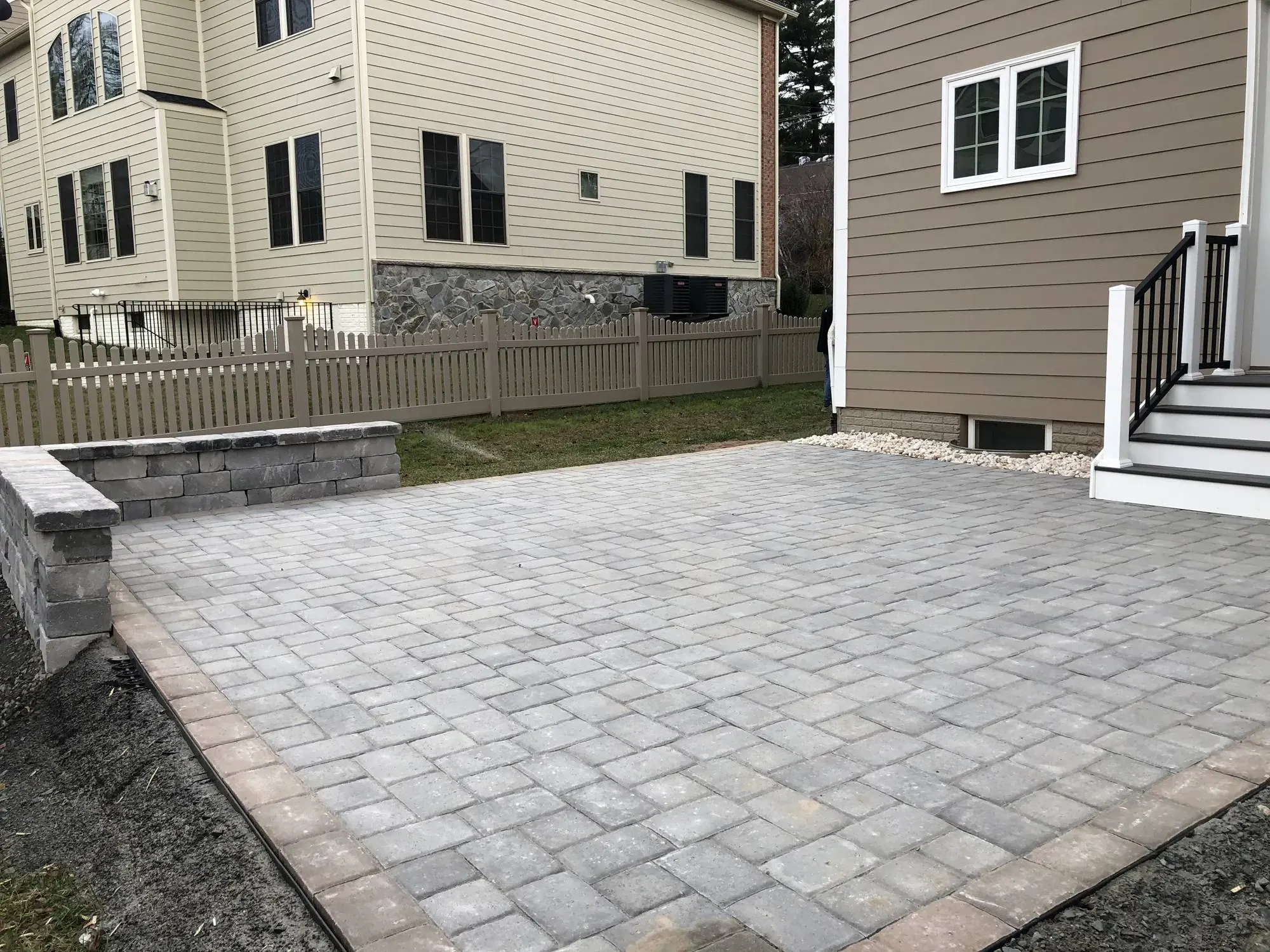
Patio Installation in Northern Virginia
Paver and flagstone patios, engineered from the base up to stay flat and beautiful for decades.
Patio installation in Northern Virginia is decided underground, long before the first stone or paver is set. The clay soil under most yards here swells when it rains and shrinks when it dries, and freeze-thaw winters lift anything built on a thin or skipped base. That is why every patio we build starts with excavation to stable subgrade and an aggregate base compacted in lifts, the hidden work that keeps a surface flat and tight for decades.
This page is the starting point for choosing between the two surfaces we build most: paver patios and flagstone patios. Both can look beautiful and last a lifetime here, but they behave differently on our lots and suit different homes and uses. Below we walk through what proper patio installation actually involves, how to pick the right material, and what building for our soil and climate really takes.
Whichever surface you land on, the engineering underneath does not change. Nearly every failed patio we are called to repair traces back to base work that was rushed or never done right, and rebuilding one is always harder than doing it correctly the first time.
What proper patio installation involves
Almost everything that decides how long a patio lasts is buried where you will never see it. The real work begins with excavation down to stable subgrade, then a thick aggregate base built up and compacted in lifts, a screeded setting layer, and clean, restrained edges before a single visible stone goes down. Get that sequence right and the surface stays flat and tight; skip a step to save time and the patio tells on itself within a few seasons.
The finish material, paver or flagstone, sits on top of that engineered base and is really the straightforward part. We build from the ground up in that order on every project, because a beautiful surface over a weak base is just a repair waiting to happen.
Paver patios vs flagstone patios: choosing your surface
Both surfaces last for decades when they are built right, so the choice comes down to look, feel, and how the space will be used. Pavers are manufactured units with consistent sizing, tight repeating patterns, and a wide range of colors, and a single unit can be lifted and reset years later without patching. Flagstone is natural quarried stone with irregular shapes and rich color, set in a full mortar bed over reinforced concrete so it stays furniture-flat.
There is no universally right answer, only the right one for your home and how you live outside. Our dedicated paver and flagstone pages go deeper on each, and on a site visit we will walk your yard and tell you honestly which fits the project in front of us.
Built for Northern Virginia clay soil and freeze-thaw
Patio installation around here has to account for ground that never sits still. The clay under most yards expands when it is wet and contracts when it dries, and every winter the freeze-thaw cycle heaves whatever is set on a shallow base. The fix is not a fancier surface, it is a deeper, better-compacted base and drainage that carries water away instead of trapping it beneath the patio.
This is also why we are cautious with poured slabs and dry-laid stone on sand in our climate. A properly built base lets a paver surface flex slightly with the ground instead of cracking, and lets a mortar-set stone surface stay locked and level through decades of freeze and thaw.
Design, permits, and why homeowners choose Stone Patios VA
Good design starts with how you actually plan to use the space, whether that is a dining area, a fire feature, steps down a slope, or a clean path from the back door out into the yard. We size and shape the patio around that, set grades so water runs away from your foundation, and match materials to your home rather than to a catalog. Where a project involves grading, walls, or a larger footprint, county permits or HOA architectural review can come into play, and the rules vary across Northern Virginia, so we help you understand what yours will need before work begins.
Homeowners choose us because we are a licensed and insured contractor that has built patios across Northern Virginia since 1991, we put the schedule and the workmanship in writing, and we do the unglamorous base work that decides whether a patio lasts. If you want a surface that still looks right in twenty years, that is where the real patio installation happens.
Choose your patios option
Paver Patios
Custom interlocking pavers, built on a deep compacted base that flexes with the ground instead of cracking.
Paver Patio Installation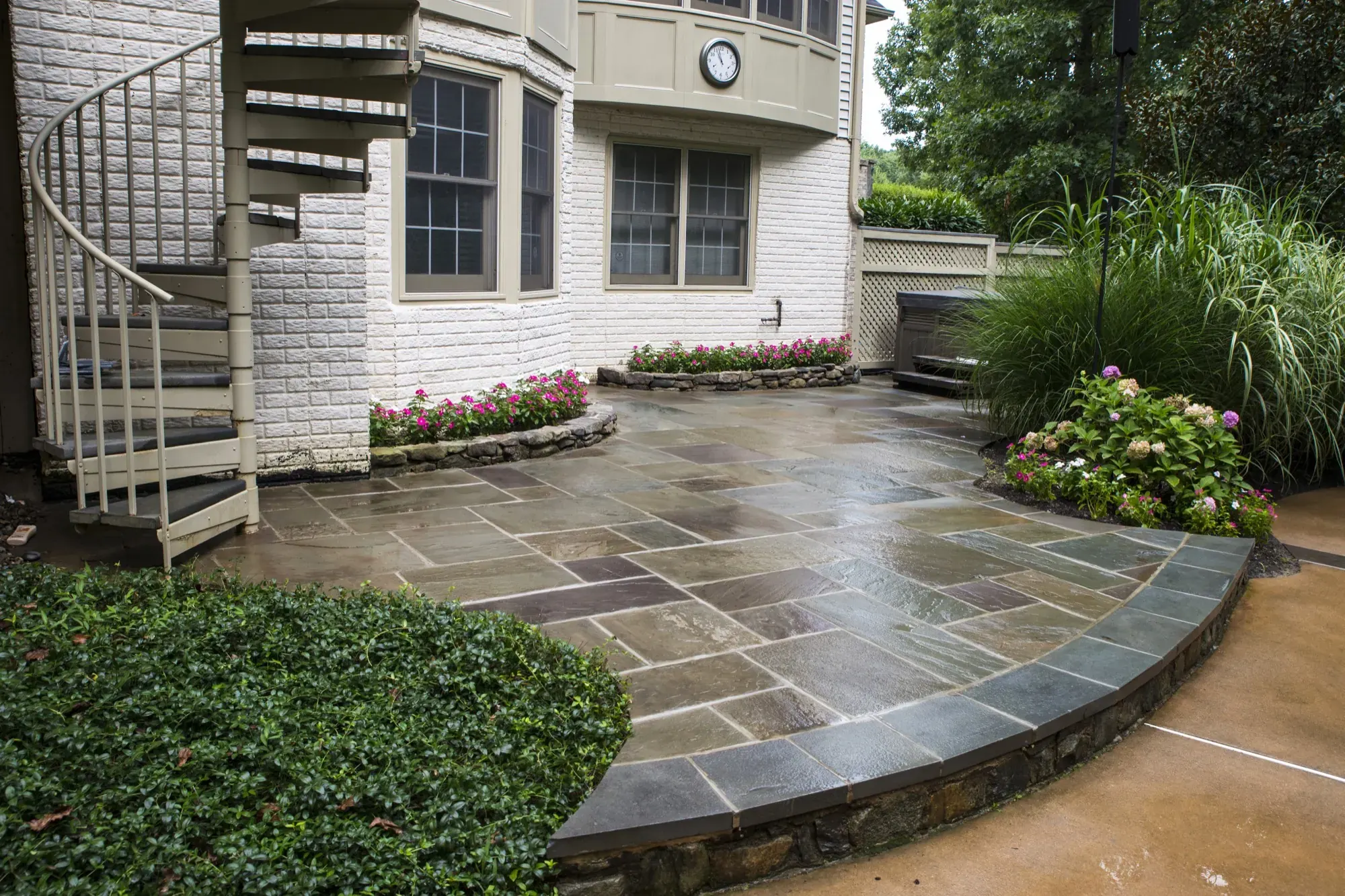
Flagstone Patios
Natural bluestone and flagstone set in a full mortar bed over reinforced concrete, for a permanent, furniture-flat surface.
Flagstone Patio InstallationWhy homeowners choose us
- Base-first construction engineered for clay soil and freeze-thaw winters
- Straight guidance on choosing between paver and flagstone patios
- Grades and drainage that carry water away from your foundation
- Licensed and insured, building across Northern Virginia since 1991
- Written estimates with a realistic schedule you can plan around
- Design shaped around how you actually use the yard
Common questions
Should I choose a paver patio or a flagstone patio?
Both last for decades when they are built right, so it comes down to look, use, and the feel you want. Pavers give you consistent sizing, tight patterns, a wide range of colors, and the ability to lift and reset a single unit later. Flagstone gives you natural stone with irregular shapes and rich color, set in mortar over concrete for a furniture-flat surface. Our paver and flagstone pages cover each in detail, and we will help you decide on a site visit.
Do I need a permit or HOA approval for a patio in Northern Virginia?
It depends on where you live and what you are building. A simple ground-level patio often does not require a county permit, but grading changes, retaining walls, and larger structures can, and the rules differ across Fairfax, Loudoun, Prince William, and the towns within them. If your home is in an HOA, exterior projects usually need architectural review before work starts. We will tell you what your project is likely to require and help you handle the paperwork.
How long does patio installation take?
Most patios we build take one to two weeks from the first day of excavation to final cleanup, depending on size, access, drainage, and any walls or steps in the design. Flagstone set in mortar needs curing time that a paver surface does not, so it can run a little longer. We give you a realistic schedule in your written estimate and keep you posted as the work moves.
What makes a patio last in Northern Virginia?
The base, almost every time. Our clay soil and freeze-thaw winters punish any surface set on a thin or skipped base, so long life comes from excavating to stable subgrade, compacting a deep aggregate base in lifts, and grading for drainage. The paver or flagstone on top matters for looks and feel, but the engineering underneath is what keeps it flat and tight for decades.
Get a free patios estimate
Tell us about your patios project and we'll respond fast. Photos welcome.
Ready to plan your patios?
Tell us about your project and we'll come measure, design, and quote it at no cost, anywhere in Northern Virginia.