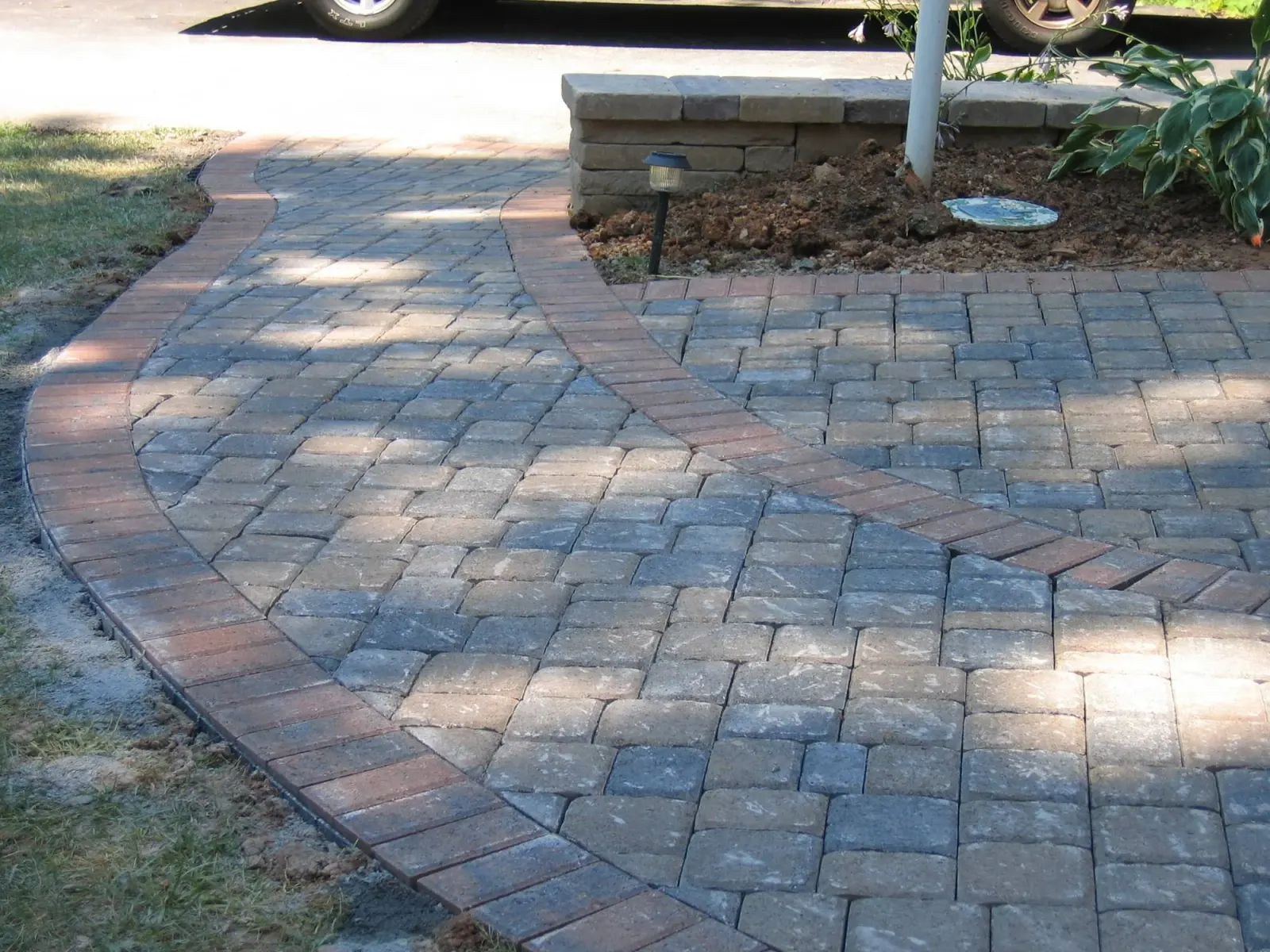
Paver Driveway Installation in Northern Virginia
Interlocking paver driveways, engineered from a deep, heavy-duty base up to carry vehicle loads for decades.
A quality paver driveway installation has to carry real weight, day after day, without rutting, sinking, or cracking the way a thin concrete slab does. For over three decades Stone Patios VA has built driveways across Northern Virginia, and nearly every failure we are called to fix traces back to one thing: a base that was never compacted deep enough for the load.
We build the other way around. Every driveway starts underground, with excavation to stable subgrade and a heavy-duty aggregate base compacted in deep layers, because that hidden work is what carries the weight of your vehicles flat and even through our wet springs and freezing winters.
What a proper paver driveway installation includes
A real paver driveway installation is mostly the part you never see. We excavate to stable ground, then lay and compact a heavy-duty crushed-stone base in lifts, thicker than a patio base because it has to carry vehicles. Over that we screed a bedding layer, set the pavers, frame the field with borders and ribbon courses, lock the perimeter with a strong edge restraint, and sweep polymeric sand into the joints so they stiffen against weeds and washout.
Skipping any of those steps is why so many driveways rut and sink early. We do not, which is what keeps ours flat and true long after a builder-grade slab would have started to crack.
Paver driveways built for Northern Virginia clay soil
The clay under most Northern Virginia yards holds water and moves with the seasons, so a driveway base has to be deep enough and compacted well enough to bridge that movement under load. On lots that drain poorly we build in drainage so water never pools beneath the pavers or sheets toward the garage, and permeable paver systems are available where you want stormwater to soak straight through the surface instead of running off.
Pavers have a real edge over poured concrete in a driveway: each unit flexes slightly with the ground instead of cracking across a slab, and if a utility cut or a settled spot ever needs attention, we lift the affected pavers and reset them rather than patching a slab you can always see.
Why homeowners choose us
- Heavy-duty base compacted deep to carry vehicle loads
- Interlocking pavers flex with the ground instead of cracking
- Any settled or utility-cut paver can be lifted and reset, never patched
- Borders and ribbon courses that frame the drive and lock the field
- Grades and drainage set to move water away from the garage and foundation
- Permeable paver options let stormwater soak through instead of running off
Part of our driveways services across all of Northern Virginia. See the areas we serve.
Common questions
Can a paver driveway really handle the weight of cars and trucks?
Yes, when the base is built for it. A driveway carries far more load than a patio, so we excavate deeper and compact a thicker aggregate base in lifts. Done right, an interlocking paver surface handles daily vehicle traffic without rutting, and the pavers themselves are rated for it.
Are pavers better than a concrete or asphalt driveway?
For Northern Virginia's clay soil and freeze-thaw, pavers usually hold up better. They flex with the ground instead of cracking across a slab, a single paver can be lifted and reset after a utility cut or a settled spot, and there is no seal-and-recoat cycle the way asphalt needs. We will tell you honestly which fits your project.
What is a permeable paver driveway?
It is a paver system with open joints and an open-graded stone base that lets rainwater soak straight through the surface instead of running off into the street. On lots with drainage limits or stormwater rules, a permeable driveway can solve a runoff problem while still carrying vehicle loads.
Our paver driveways projects
View full gallery → 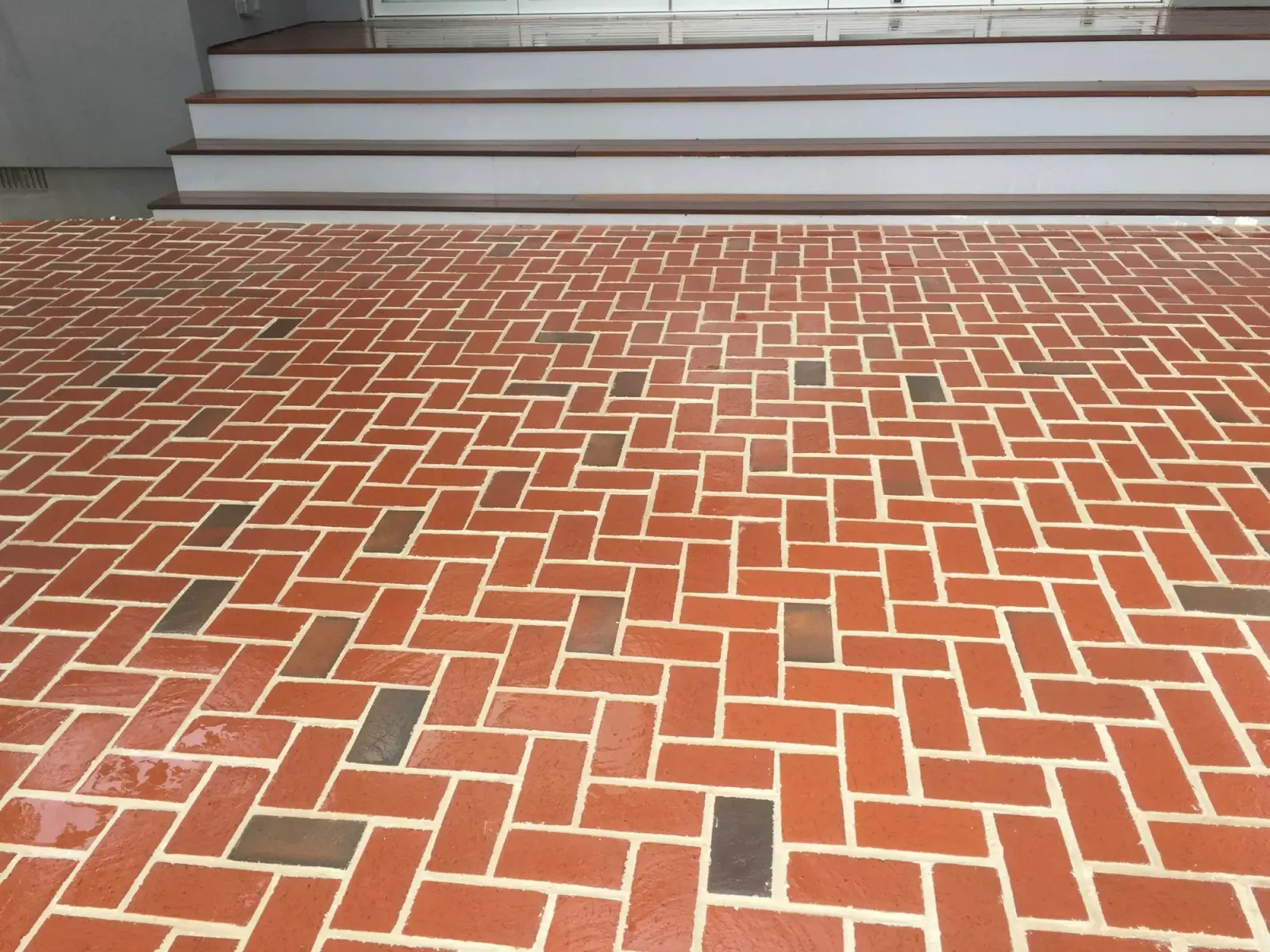
Ready for your paver driveways?
Tell us about your project and we'll come measure, design, and quote it at no cost, anywhere in Northern Virginia.