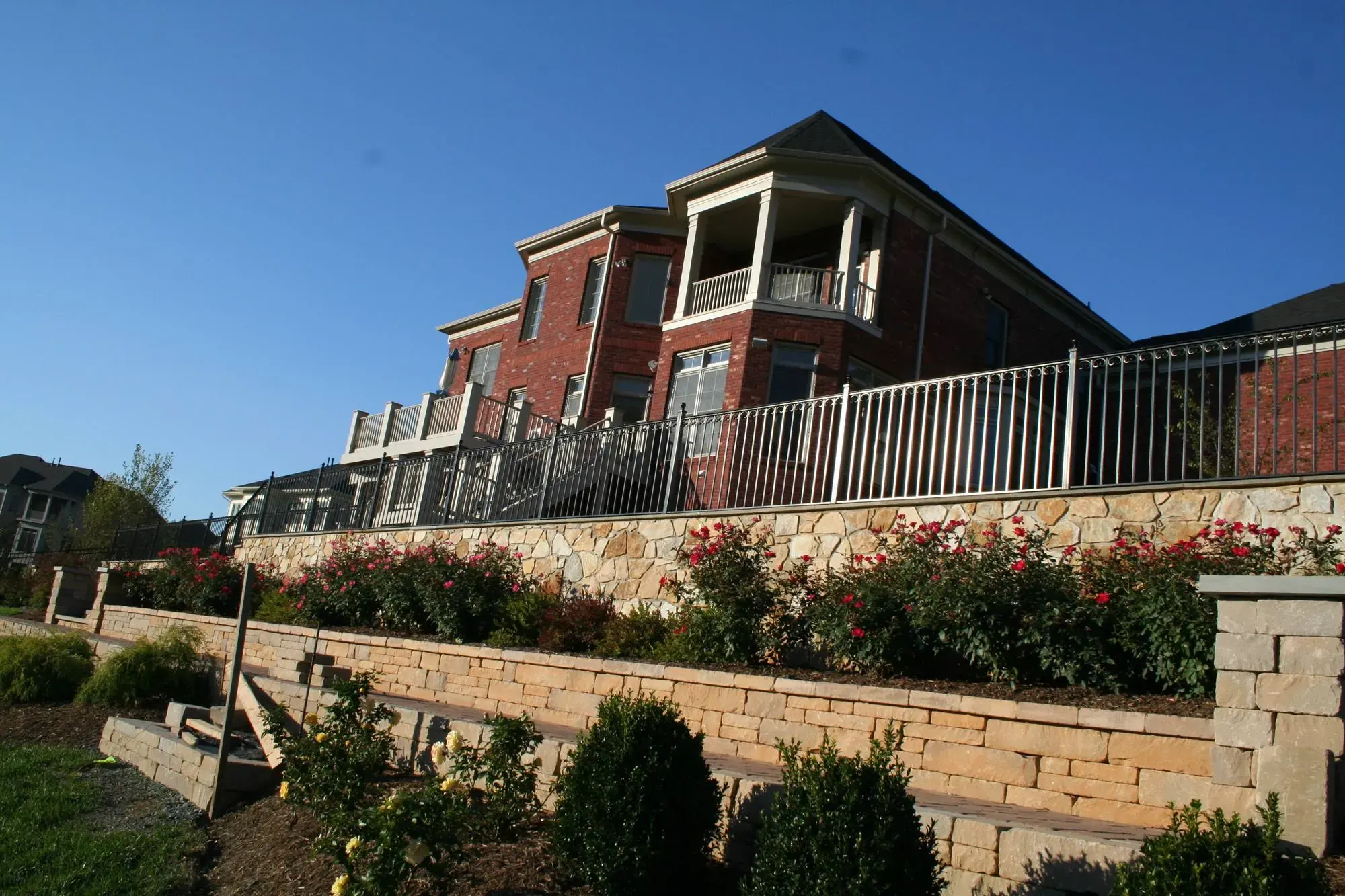
Retaining Wall Installation in Northern Virginia
Engineered segmental and natural stone retaining walls built to hold.
Northern Virginia's rolling terrain means a lot of yards need retaining walls to control erosion, manage grade changes, and turn unusable slopes into level, usable space. Stone Patios VA builds engineered segmental block and natural stone retaining walls that are designed to last.
Proper retaining walls are about more than stacking block. We install with the correct base, backfill, drainage stone, and geogrid reinforcement so the wall handles soil and water pressure for the long haul. Taller walls are engineered to code.
Why choose our retaining wall installation
- Stops erosion and stabilizes slopes
- Creates flat, usable yard space and terraced gardens
- Built with proper drainage to relieve water pressure
- Geogrid reinforcement for tall or load-bearing walls
- Doubles as seating with built-in sitting walls
Our retaining walls process
- 1
Site evaluation & design
We measure the slope, assess soil and load, and design the wall, with engineered drawings where the height requires them.
- 2
Excavation & base
We cut into the slope and compact a crushed-stone leveling pad set below grade.
- 3
Block, stone & geogrid
Courses go up level and true, with geogrid reinforcement layered into the backfill on taller walls.
- 4
Drainage behind the wall
Clean drainage stone and perforated pipe carry water out so pressure never builds behind the wall.
- 5
Backfill, caps & grading
Compacted backfill, cap units, and finish grading tie the wall into the landscape.
Built for Northern Virginia conditions
Many of the older neighborhoods in Fairfax County were graded decades ago, and plenty of those slopes are now creeping toward patios, driveways, and fence lines. Our clay soil makes it worse, because it swells when saturated and pushes hard against anything holding it back. That is why every wall we build gets clean drainage stone and perforated pipe behind it, so water pressure never gets the chance to build. Walls that skip that step are the ones you see leaning within ten years.
Wall height drives everything else about the project. In most Northern Virginia jurisdictions, walls retaining more than about three feet of earth, or shorter walls carrying a driveway or structure, generally need engineered drawings and a permit, and the specifics vary by county. We design to the local rules, add geogrid where the soil load calls for it, and often terrace long slopes in places like Burke and Falls Church where one tall wall would be the wrong answer.
More on this work around the region: retaining walls in Arlington, retaining walls in Falls Church, retaining wall construction in Burke. Planning ahead? Read our guide: our retaining wall permit guide.
Common questions about retaining wall installation in Northern Virginia
Why do retaining walls fail?
Most retaining wall failures come from poor drainage and an inadequate base. We install drainage stone, perforated pipe, and geogrid reinforcement so water pressure and soil load are properly managed.
What materials do you use for retaining walls?
We build with premium segmental retaining wall block and natural stone, selected to match your home and landscape.
Do I need a permit for a retaining wall in Northern Virginia?
Taller retaining walls, generally those over a few feet or that support a load like a driveway, typically require an engineered design and a permit in Northern Virginia. We evaluate the height and load and handle the permitting so your wall is built to code.
What is the best material for a retaining wall?
It depends on the height, the load, and the look. Segmental concrete block is versatile and engineered for strong retention, while natural stone and boulders give a more organic appearance. We recommend the right system for your slope during the estimate.
Can a retaining wall fix erosion on a slope?
Yes. A properly engineered retaining wall holds back soil, controls runoff, and turns an eroding or unusable slope into level, functional yard. We pair walls with drainage so water moves away from the structure.
How long do retaining walls last?
A retaining wall built with the right base, geogrid reinforcement, and drainage will last for decades. Most failures come from skipped drainage or an undersized base, which is exactly what proper engineering prevents.
Our retaining walls projects
View full gallery →


Related services
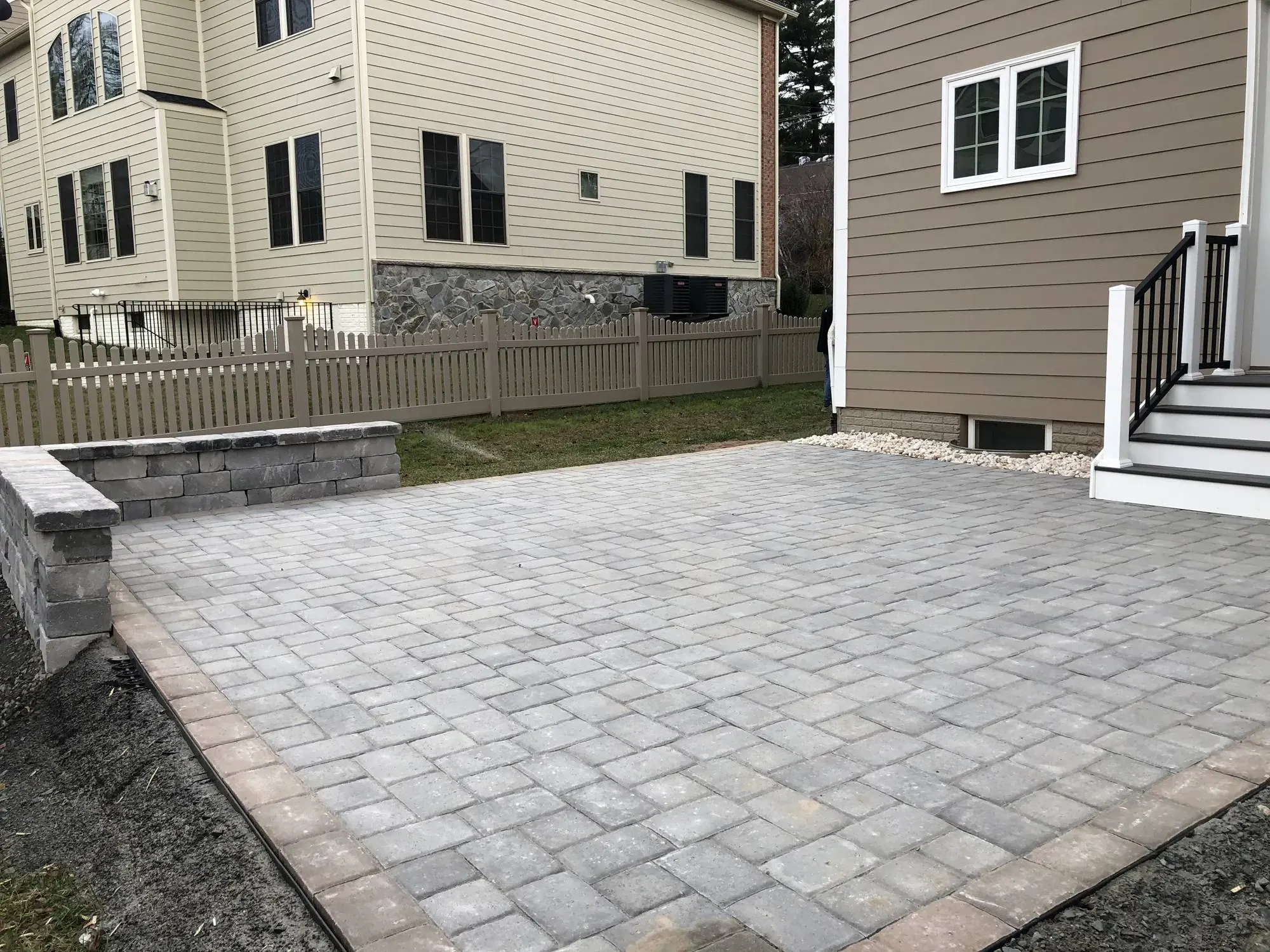
Paver Patios
Custom paver patios built to last, the centerpiece of Northern Virginia outdoor living.
Learn more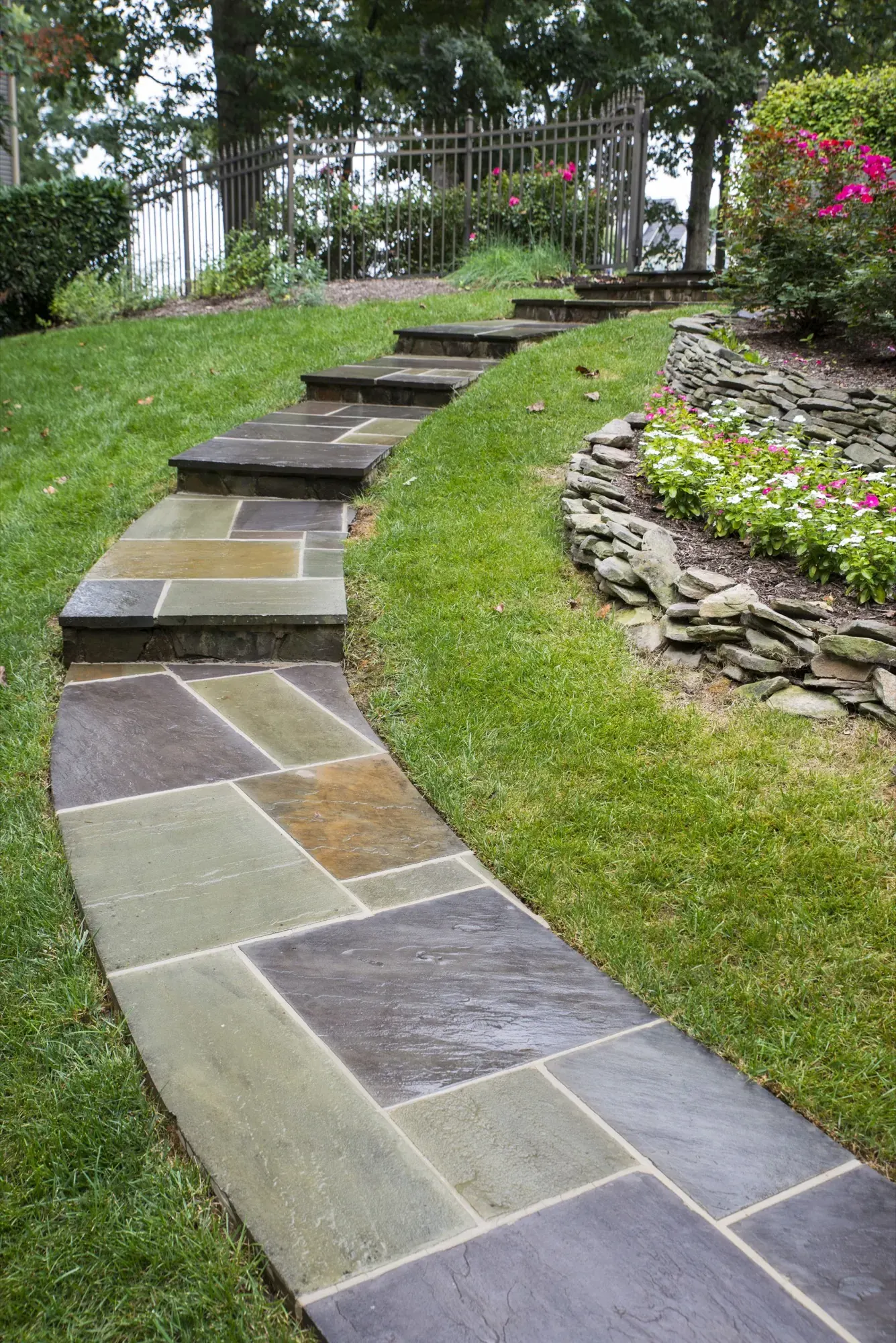
Steps & Stairs
Safe, beautiful stone and paver steps that handle grade changes with style.
Learn more
Walkways & Pathways
Inviting front walks and garden paths that connect your outdoor spaces.
Learn more